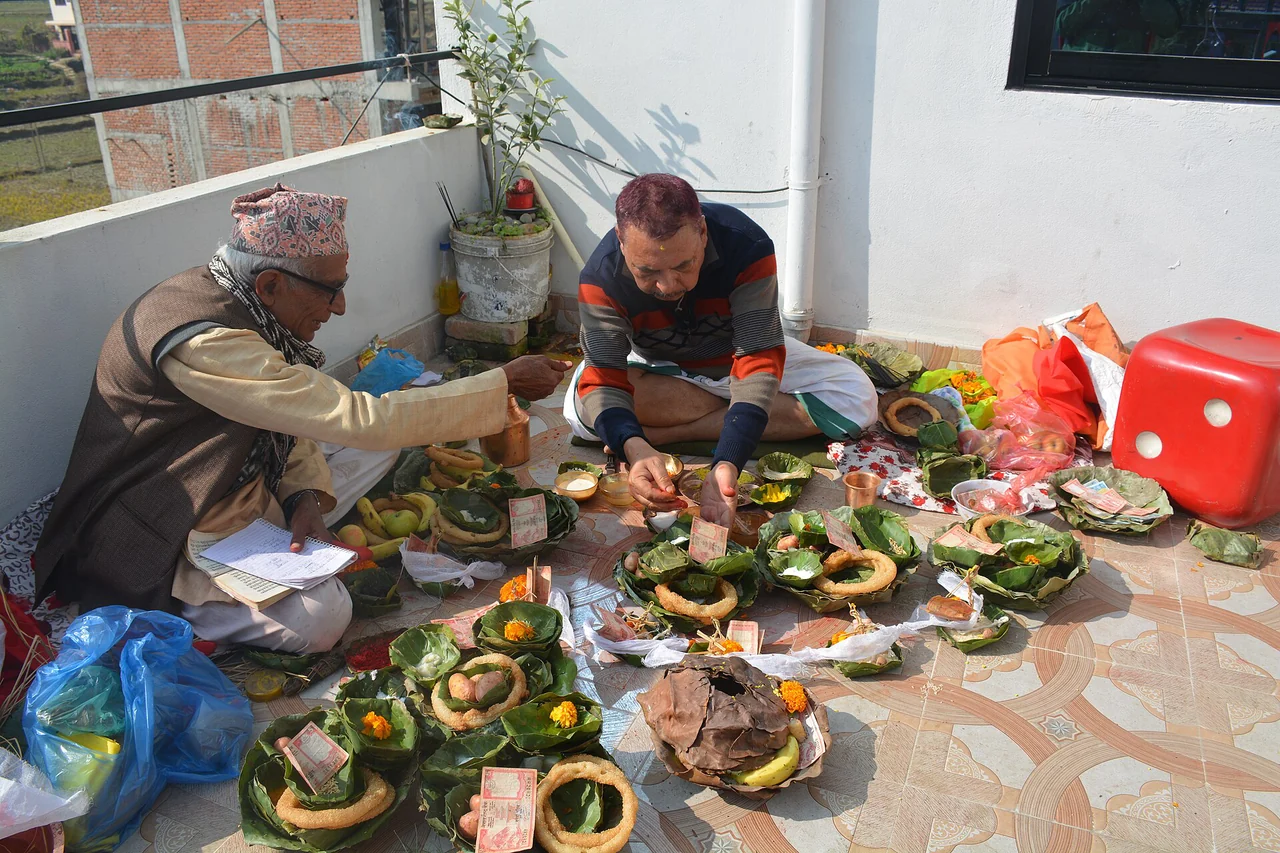
Tripindi Shraddha is an ancestral rite in which three distinct food offerings, called pindas, are made with prayers for the peace and onward journey of the departed. It includes remembrance of ancestors whose names or family lineages may no longer be known. A ritual manual quoted below associates its three offerings with Vishnu, Brahma and Rudra.
Rituals
Tripindi Shraddha: meaning, purpose and three offerings
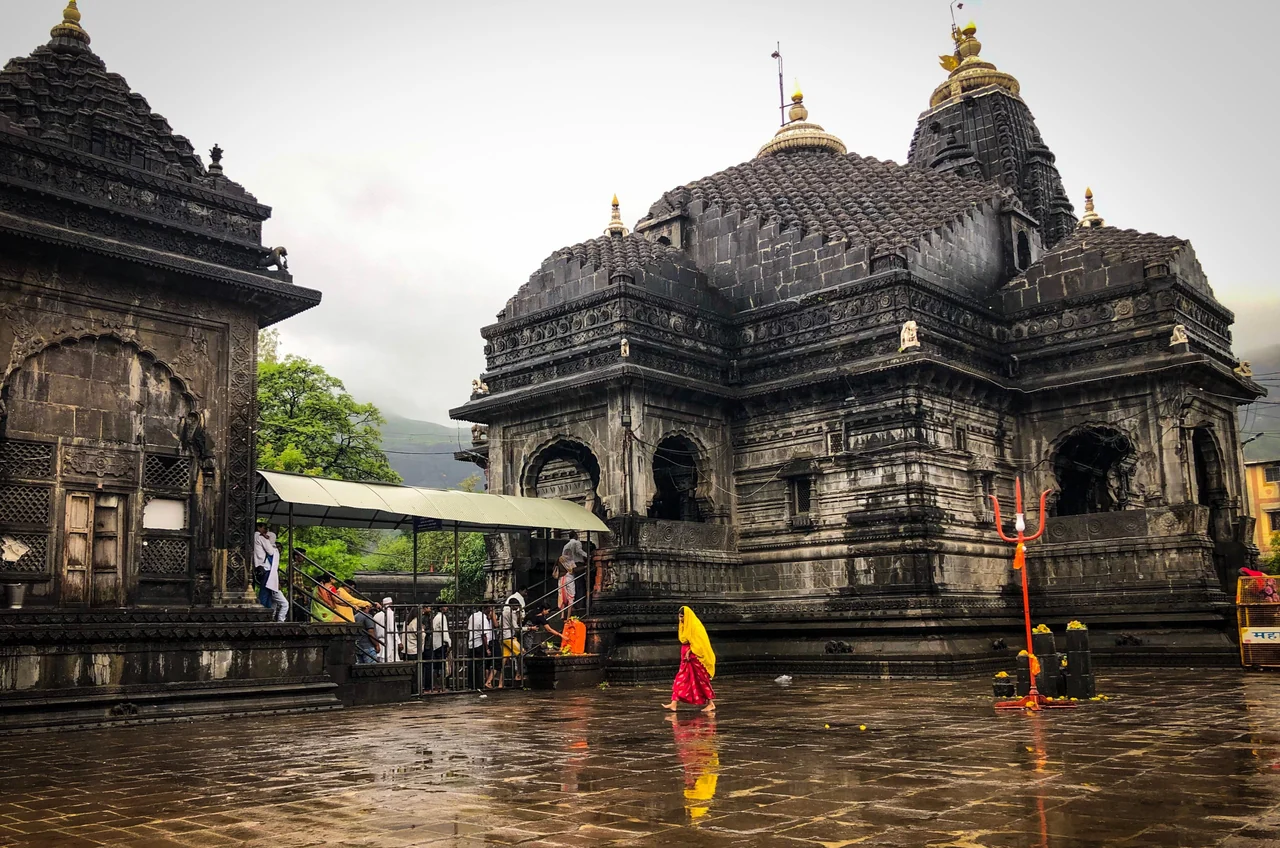
Families may hear of Tripindi when discussing interrupted ancestral observances or forgotten ancestors. Understanding its purpose matters more than simply counting the offerings: three pindas also occur in other forms of Shraddha.
What do the three pindas represent?
Sanskrit Documents reproduces a passage attributed to Rudradatta Pathak’s Gaya Shraddha Paddhati. It describes this arrangement:
| Offering | Association | Term used in the prayers |
|---|---|---|
| Barley pinda | Vishnu | Sattvika |
| Rice pinda | Brahma | Rajasa |
| Sesame pinda | Rudra | Tamasa |
The invocation includes अज्ञातनामगोत्राः, meaning those whose names and gotras, or ancestral lineages, are unknown. The prayers ask for satisfaction and a favourable onward journey. They give the offerings a broader scope than remembrance of three named relatives.
Sattva, rajas and tamas are the three qualities of nature, discussed in Bhagavad Gita 14.5–8. The Gita supplies the meaning of those terms; the Tripindi arrangement above comes from the quoted ritual manual.
What happens during Tripindi?
The main sequence brings together a declaration of purpose, worship, the three pinda offerings and water offerings. Sanatan Sanstha’s account also includes bathing beforehand, Vishnu Tarpan, feeding and gifts for Brahmins. The family’s priest leads the invocations and the order of the adopted procedure.
Is Tripindi required when annual Shraddha has been missed?
Some traditions recommend it when ancestral rites have been neglected. The sources cited here do not establish a single rule making it compulsory for every family after exactly three missed years. The useful starting point is the family’s actual record: whom it remembers, what observances took place and where the continuity was interrupted.
Its religious purpose is prayer for the departed. Illness, financial losses or disagreements do not by themselves show that Tripindi is required.
How is it different from ordinary Shraddha?
Ordinary ancestral offerings can address three known generations. Ashvalayana Grihya Sutra IV.7.13 names father, grandfather and great-grandfather; Shatapatha Brahmana 2.4.2.18–19 describes three rice offerings. In the Tripindi passage above, the invocations instead address a wider group, including those whose identities are unknown.
Sapindikaran has another purpose: joining a recently deceased person with the ancestors. Narayan Bali centres on Narayana worship for a particular post-death concern. The purpose and prayers identify each rite, even when they share food and water offerings.
When is it performed?
Sanatan Sanstha includes Pitrapaksha among its occasions. The date for a particular family is chosen according to the rite and tradition being followed. It helps to take the deceased relatives’ details and the record of earlier rites to that discussion, rather than select a ceremony from its name alone.
Sources & further reading
- Sanatan Sanstha — Narayan Nagbali and Tripindi ShradhReligious account: sections 3B, 5 and 6.
- Ashvalayana Grihya Sutra IV.7 — Hermann Oldenberg, 1886Public-domain primary translation. IV.7.1 distinguishes forms of Shraddha; IV.7.13 addresses three ancestral generations. The new-moon explanation appears in the translator’s note.
- Shankhayana Grihya Sutra IV.2 — Hermann Oldenberg, 1886Public-domain primary translation. Describes Ekoddishta as the rite for one deceased person, providing a comparison with collective ancestral observances.
- Shankhayana Grihya Sutra IV.3 — Hermann Oldenberg, 1886Public-domain primary translation. Describes four vessels, the joining of the deceased’s portion with ancestral portions, a corresponding pinda action and timing alternatives.
- Garuda Purana, Preta-khanda 40 — Sanskrit textAncient Sanskrit primary text. Verses 1–18 give the Narayan Bali setting; 13–15 list multiple places; 32–38 describe one ritual arrangement. Religious descriptions are presented as textual teachings.
- Sanskrit Documents — Yava commentary quoting Gaya Shraddha PaddhatiManual quotation: “गया श्राद्ध पद्धति” paragraph and subsequent pinda/arghya formulas.
- Bhagavad Gita 14.5–8 — Sanskrit text on the three gunasOnly the Sanskrit verses are used, in our plain-language paraphrase. General explanation of sattva, rajas and tamas, not a Tripindi prescription.
- Shatapatha Brahmana 2.4.2 — offerings to the FathersMadhyandina recension, Julius Eggeling translation, 1882; printed pp. 361–369. See 2.4.2.7–8, 16 and 18–24 for new moon, afternoon, water and rice-cake offerings.
Read our editorial policy for sourcing and updates.
All articles and guides