Sapindikaran is the ceremony that joins a newly deceased family member with the ancestors in shared Shraddha offerings. Before it, the deceased is addressed separately in the relevant rites; afterwards, the person is remembered with the ancestral group. The ceremony expresses this change by joining the deceased person’s offerings with those of the ancestors.
Rituals
Sapindikaran: meaning, ceremony and when it is performed
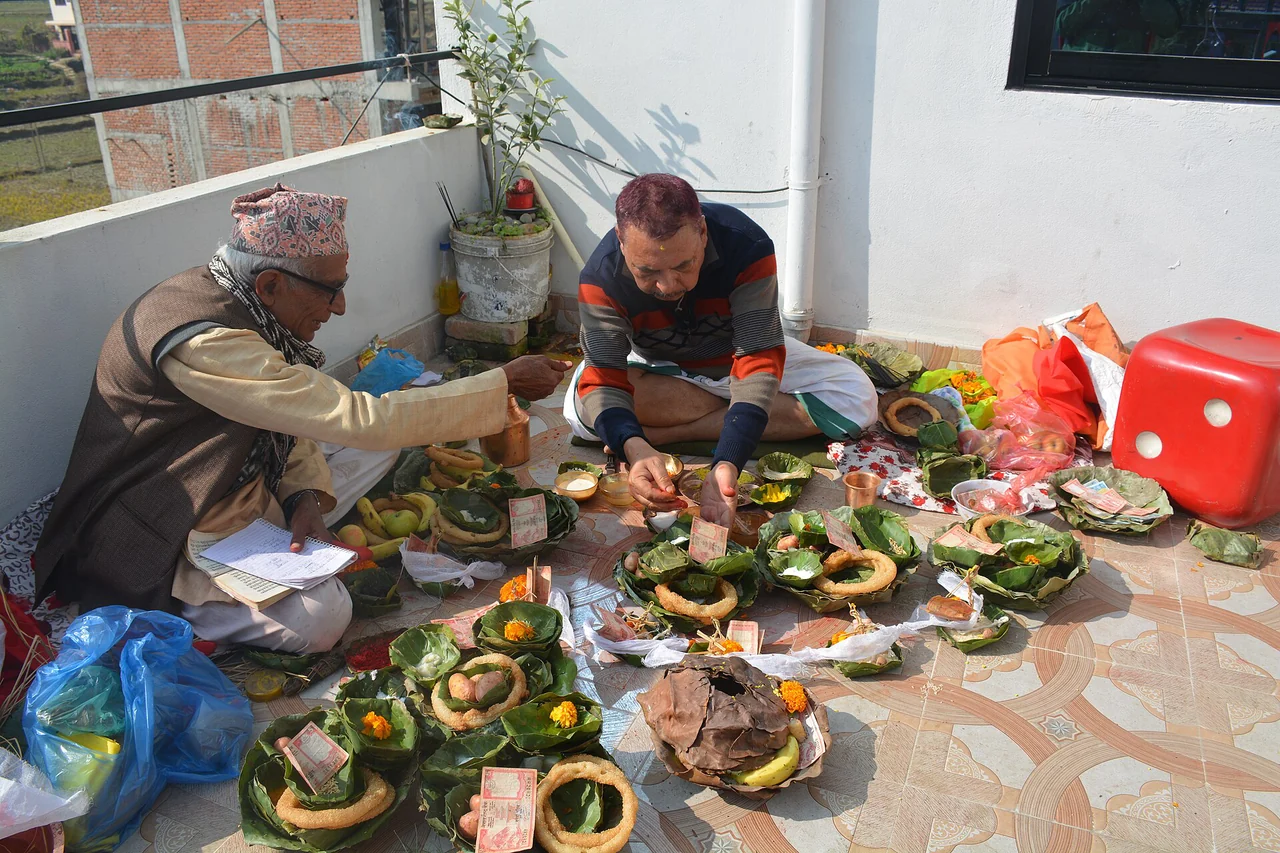
The name is also written Sapindikarana. It belongs to the sequence of rites following a death, rather than being an annual ceremony in its own right.
What is joined during the ceremony?
Shankhayana Grihya Sutra IV.3 describes four vessels containing water, sesame and scents: one for the newly deceased and three for the ancestors. The contents of the deceased person’s vessel are poured into the other three. The text directs a corresponding joining of the pinda, the prepared food offering.
Vishnu Purana III.13 gives a related account. The action makes the meaning of the ceremony visible: a separate offering is brought into the ancestral community. The remembered person’s place within the family’s continuing Shraddha changes.
Is it performed on the twelfth day or after a year?
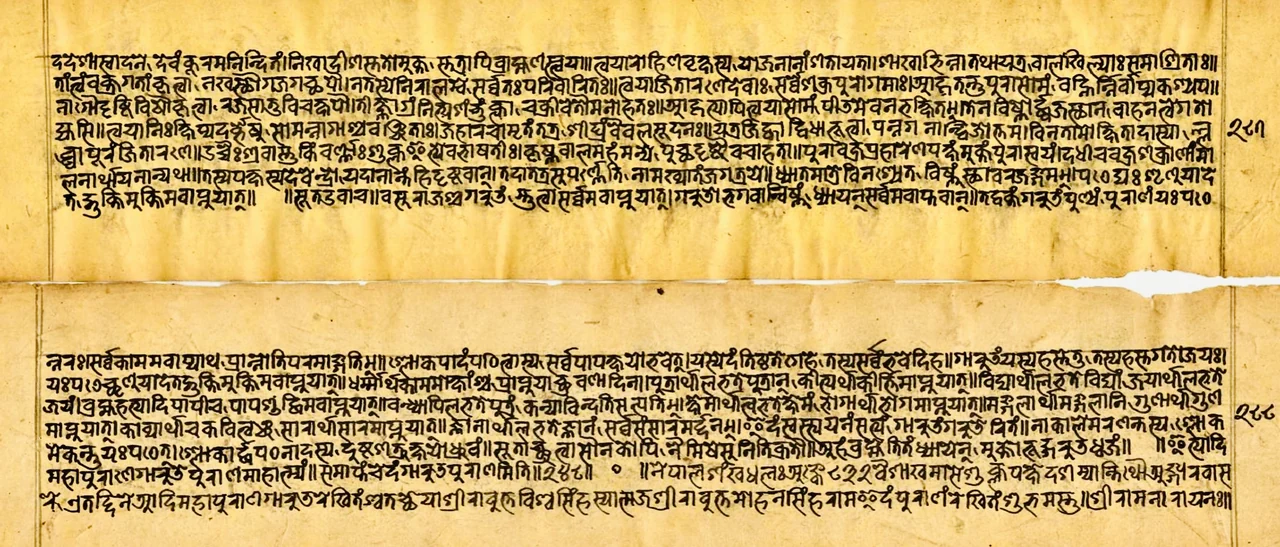
Both timings have a textual basis. Garuda Purana, Preta-khanda 26.8–15, discusses a completed year, three fortnights, six months and the twelfth day. Verses 13–14 specifically commend the twelfth day. Shankhayana IV.3 names a year, three fortnights or an earlier auspicious family occasion.
This explains why two families may give different answers. The date is chosen within the whole post-death sequence followed by that household. The guide arranging the rites needs the date of death, the ceremonies already completed and the family’s customary procedure.
Who performs Sapindikaran?
Garuda Preta-khanda 26.23–27 discusses several family arrangements. It begins with the son and also names the wife, brother and other relations in the circumstances described; verse 27 allows the wife to have it performed through a priest. The passage therefore contains more than a single family situation.
The person taking responsibility and the way the ceremony is conducted are settled according to the applicable family procedure. Having no son is a question to discuss with that context, rather than a reason to assume no observance is possible.
What happens to Shraddha afterwards?
The person continues to be remembered. Parvana Shraddha concerns offerings to the ancestors together; annual Shraddha brings the recurring lunar anniversary. Sapindikaran marks entry into the ancestral group within that continuing tradition.
Garuda 26.9 and 26.12 describe the change in status from preta, the departed before this joining, to the ancestral group. A family unsure whether Sapindikaran has already taken place should check its earlier ritual record and the person who conducted those rites.
Sources & further reading
- Shankhayana Grihya Sutra IV.3 — Hermann Oldenberg, 1886Public-domain primary translation. Describes four vessels, the joining of the deceased’s portion with ancestral portions, a corresponding pinda action and timing alternatives.
- Shankhayana Grihya Sutra IV.2 — Hermann Oldenberg, 1886Public-domain primary translation. Describes Ekoddishta as the rite for one deceased person, providing a comparison with collective ancestral observances.
- Vishnu Purana — book III, chapter 13 (H. H. Wilson, 1840)An identified historical translation distinguishing post-death observances and incorporation into the ancestral group. Its schedule is not universalised.
- Garuda Purana, Preta-khanda 26 — Sanskrit textAncient Sanskrit primary text. Verses 8–15 preserve timing alternatives for Sapindikaran; 23–27 discuss family roles and arrangements in context.
Read our editorial policy for sourcing and updates.
All articles and guides