Narayan Bali is a Hindu rite in which Narayana, or Vishnu, is worshipped and offerings are made for the welfare of a departed person. It is especially associated with deaths described in religious texts as untimely or unnatural. The family prays for the deceased to attain peace and a favourable onward journey. Here, bali means an offering.
Rituals
Narayan Bali: meaning, purpose and ceremony
The rite combines worship of Vishnu with water and food offerings for the departed. Its name is often heard alongside Nagbali, particularly at Trimbakeshwar, but the two rites have different purposes.
Why is Narayan Bali performed?
The Garuda Purana, Preta-khanda 40, begins with a question about rites after an untimely death. Verses 4–9 discuss circumstances such as drowning, fire and falls; verse 11 names Narayan Bali. The chapter presents it as a means of helping the departed beyond the condition called preta.
In this context, preta means the departed person awaiting transition into the ancestral community. Garuda Preta-khanda 26.9 and 26.12 connect that transition with joining the pitrs, the ancestors. This religious vocabulary concerns the deceased’s journey and the family’s prayers for them.
Whether Narayan Bali belongs in a particular family’s rites depends on the circumstances of the death and the ritual tradition followed. A discussion with the family priest should begin with those details and the ceremonies already performed. Illness or financial difficulty alone does not establish a ritual requirement.
What happens during the ceremony?
The ceremony begins with a declaration of its purpose, called the sankalpa. Worship of Narayana, offerings for the deceased, water offerings called tarpana, and feeding and gifts are brought into a prescribed sequence.
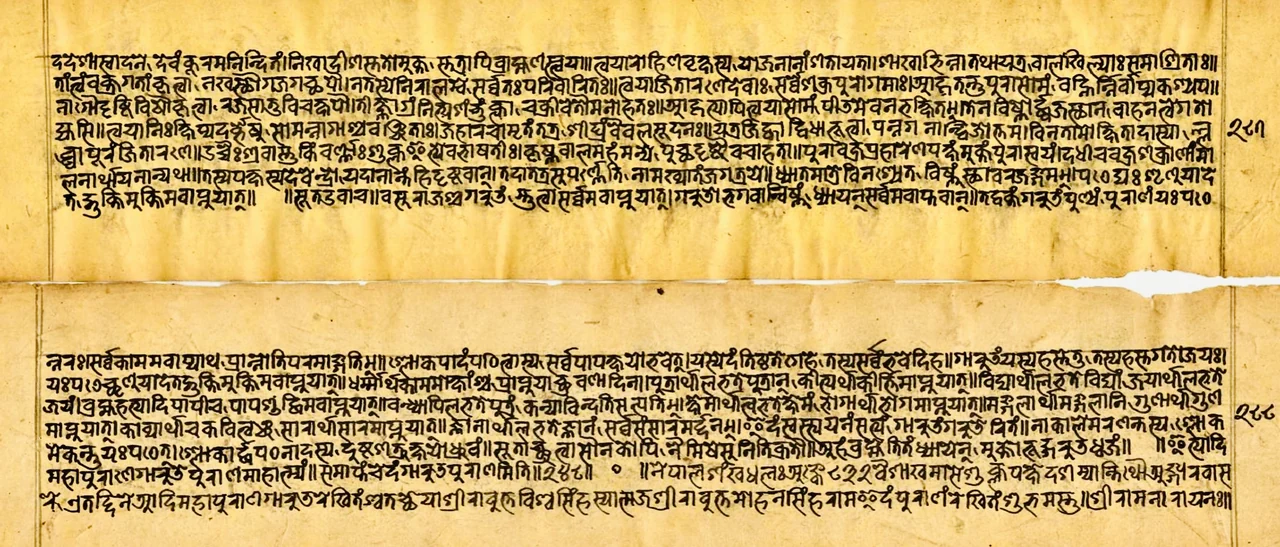
One identifiable example is procedure no. 4, based on the Dharma-sindhu, in Pandit Sri Rama Ramanuja Achari’s Narayana Bali Sangraha, printed pages 49–51. It includes two ritual vessels, ten prepared food offerings, worship, sesame-water offerings and Brahmin feeding; a fire offering is optional in that account.
The Garuda Purana’s arrangement is more elaborate. Preta-khanda 40.32–38 gives five vessels for Vishnu, Rudra, Brahma, Yama and the deceased. Verses 44–58 describe a human-form ritual figure, or puttalaka, made with plant materials representing the body. Verse 64 describes its cremation while remembering Vishnu. These passages explain why some accounts of the rite include a representation of the deceased and a funeral-like sequence.
Narayan Bali and Nagbali: what is the difference?
Narayan Bali concerns a departed person. Nagbali is a separate serpent-related rite. They may be performed together, which is why the combined name Narayan–Nagbali is common. Sanatan Sanstha describes a three-day combined observance.
For planning, establish whether the proposed ceremony is Narayan Bali alone, the combined rites, or a wider sequence after a death. The number of days depends on that scope and the procedure followed. A mourning period mentioned in a text is also distinct from the hours or days spent performing the ceremony.
Where can it be performed?
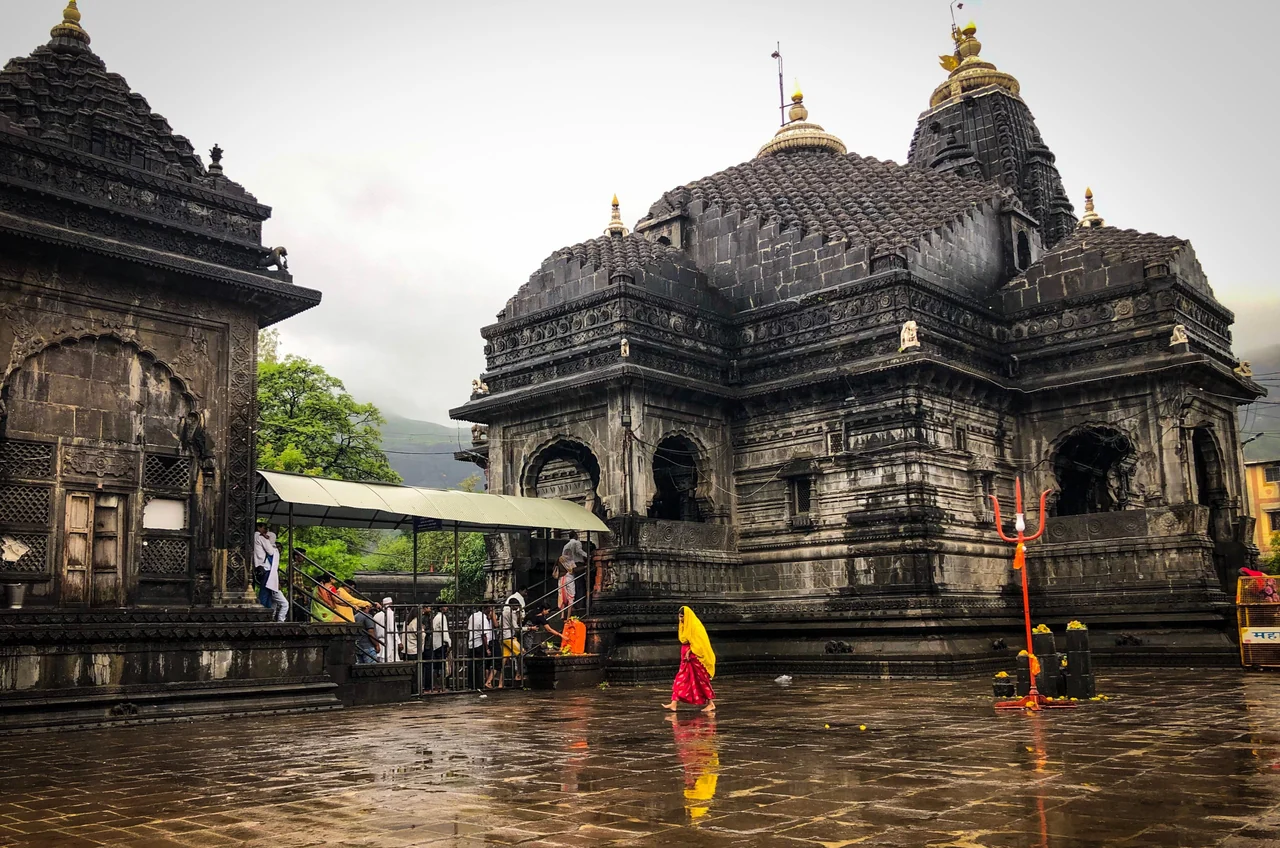
Trimbakeshwar is a well-known setting for the combined observance. The scriptural passage itself names several settings: Garuda 40.13–15 mentions the Ganga, Yamuna, Naimisha and Pushkar, and also suitable bodies of water, the home and a temple. The rite is therefore described more widely than the practice of one pilgrimage town.
Does it replace annual Shraddha?
Annual Shraddha is recurring remembrance on a relative’s lunar death anniversary. Narayan Bali addresses a particular post-death situation; Garuda 40.65 refers to further observances afterwards. The family’s later remembrance continues within its customary calendar.
The passage naming Narayan Bali
कृष्णाग्रे कारयेद्विप्र बलिं नारायणाह्वयम् ।
Garuda Purana, Preta-khanda 40.15: the sense is that the offering called Narayana is to be performed before Krishna. The next line directs tarpana towards the departed. Verses 16–18 connect the rite with Vishnu worship, sacred recitation and prayer for release from the preta condition.
Sources & further reading
- Garuda Purana, Preta-khanda 40 — Sanskrit textAncient Sanskrit primary text. Verses 1–18 give the Narayan Bali setting; 13–15 list multiple places; 32–38 describe one ritual arrangement. Religious descriptions are presented as textual teachings.
- Narayana Bali Sangraha — Pandit Sri Rama Ramanuja AchariNamed contemporary religious compilation, dated 21 January 2025. Its contents page identifies five textual procedures; cited for this diversity, not as a universal prescription.
- Sanatan Sanstha — Narayan Nagbali and Tripindi ShradhReligious account: sections 3B, 5 and 6.
- Garuda Purana, Preta-khanda 26 — Sanskrit textAncient Sanskrit primary text. Verses 8–15 preserve timing alternatives for Sapindikaran; 23–27 discuss family roles and arrangements in context.
Read our editorial policy for sourcing and updates.
All articles and guides