Pitrapaksha grew out of a much older Hindu tradition of honouring the ancestors. Vedic hymns already invite the departed to receive offerings. Later texts describe named family offerings, monthly Shraddha and an annual ancestral fortnight. These are connected strands of the tradition, rather than evidence that every present-day custom began at the same moment.
History
The history of Pitrapaksha
The early background: the Vedic ancestors
Rigveda 10.15 is a hymn addressed to the Pitrs, the ancestral Fathers. They are invited to sit on sacred grass, receive offerings and bless the living. Verse 13 includes ancestors whose identities are known and those whose identities are not; verse 14 includes the cremated and the uncremated.
This is an early textual witness to ancestral worship. The hymn does not name a September–October fortnight or give a modern Pitrapaksha calendar. Its subject is the relationship with the departed that underlies later observances.
From invocation to named household offerings
Shatapatha Brahmana 2.4.2 describes an offering to the Fathers at the new moon. The account specifies the afternoon, water and prepared rice offerings, and names the father, grandfather and great-grandfather. The relevant passages are 2.4.2.7–8, 16 and 18–24 in Julius Eggeling's translation of the Madhyandina text.
The text gives a recognisable ritual setting: a household remembers particular members of its lineage through food, water and spoken names. It describes a monthly ancestral offering, so it should not be treated as the complete timetable of the later annual fortnight.
Where the annual fortnight appears
The later literature discusses several occasions for Shraddha. Manusmriti chapter 3 treats monthly offerings, lunar dates and afternoon performance. Vishnu Purana 3.13 distinguishes rites following a death from other ancestral observances.
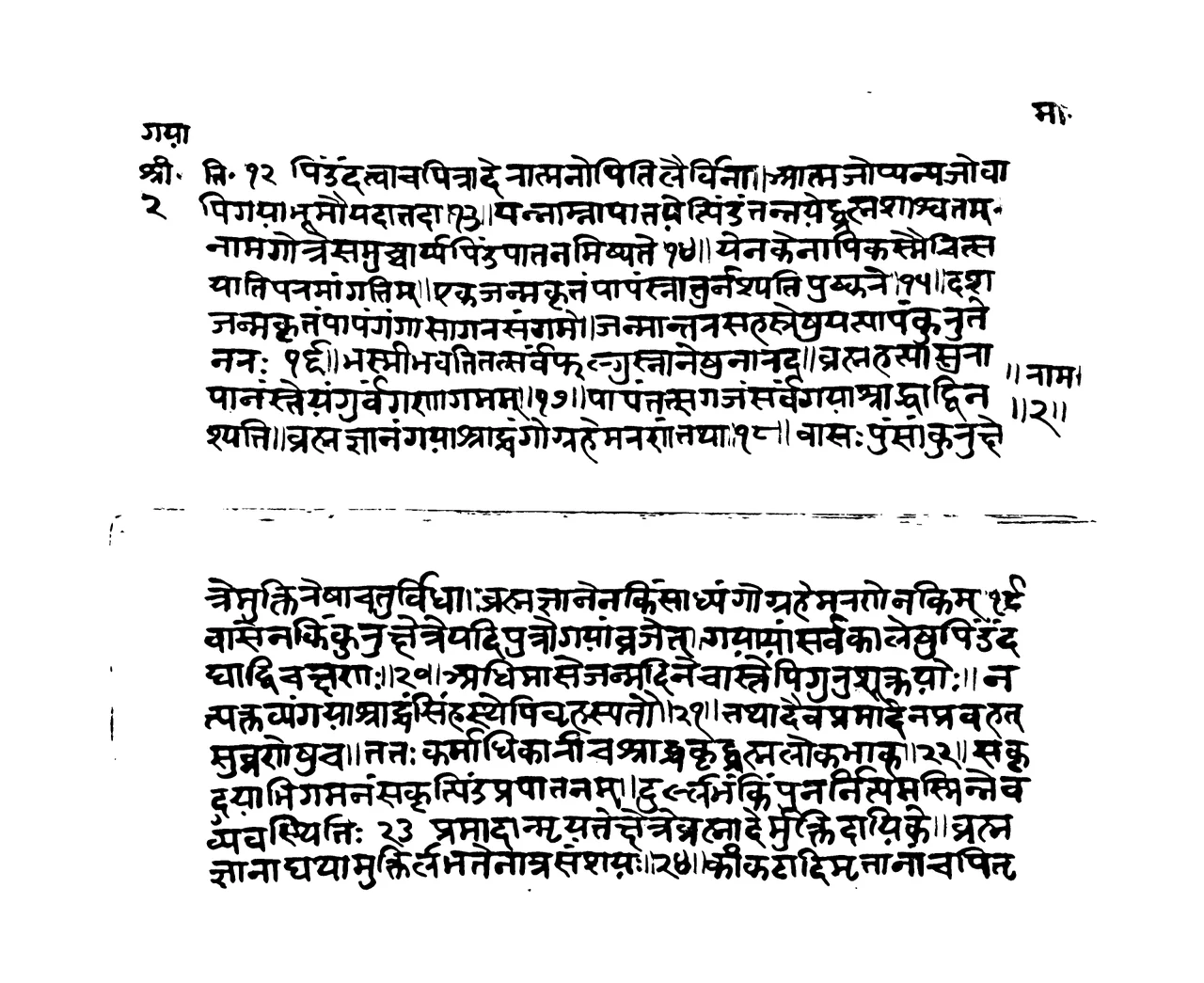
A direct reference to the annual season appears in chapter 99 of M. N. Dutt's 1908 Garuda Purana edition. Printed pages 284 and 289 refer to Pretapaksha and offerings during Bhadra's dark fortnight, through the new moon. This establishes the fortnight's place in that textual tradition; it does not tell us the date of its first observance.
How the tradition reaches today's households
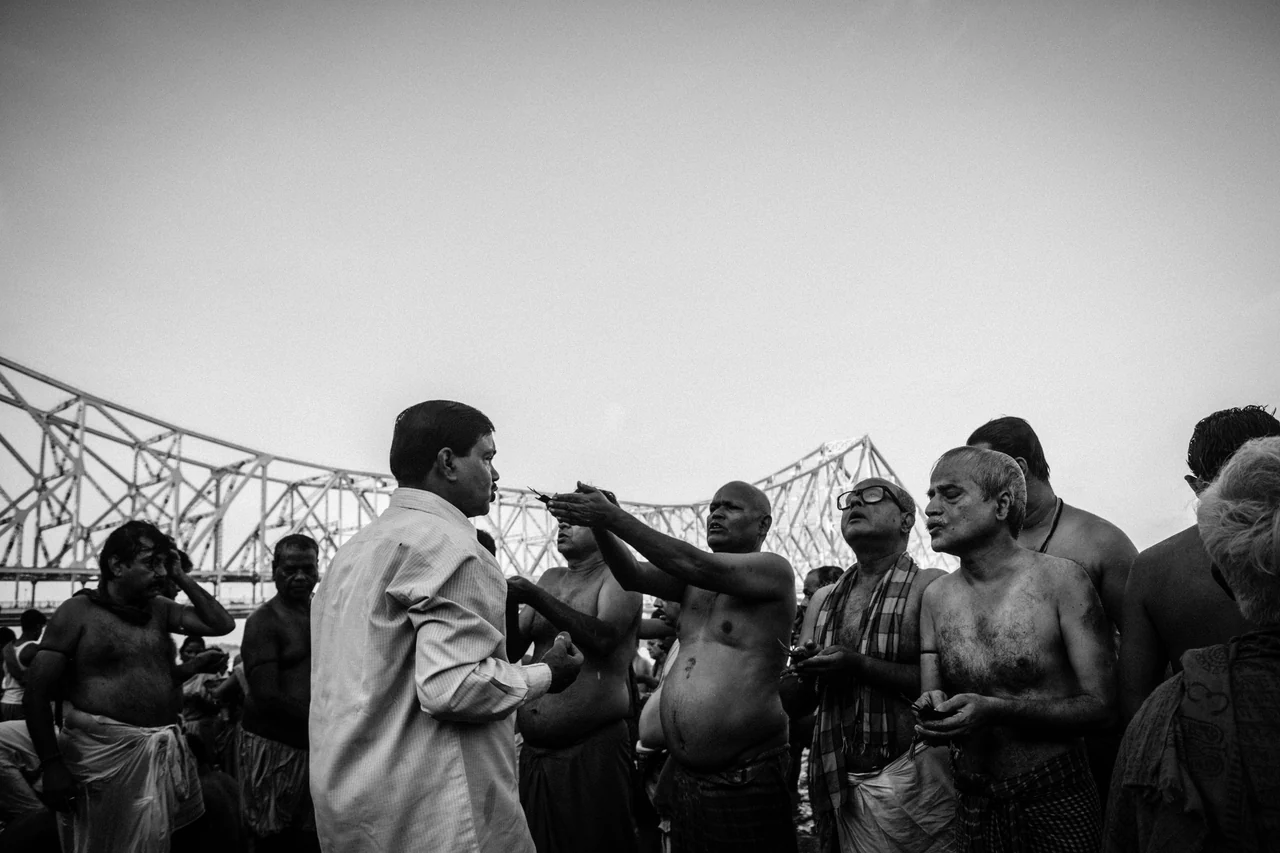
Texts explain the religious duty; families preserve names, death tithis and the forms of worship they follow. Sacred places such as Gaya add pilgrimage traditions and their own scriptural accounts. These different settings help explain why there is a shared season of ancestral remembrance alongside regional differences in calendar names, food and ceremony.
The annual Shraddha of one relative and the observance during Pitrapaksha also remain distinct. The first follows that person's lunar anniversary; the second belongs to the shared ancestral season. Their relationship is explained in the guide to the annual Shraddha date.
Who started Pitrapaksha?
No single founder or founding year is established by the sources cited here. A more faithful account follows the evidence from ancestral hymns to ritual texts and later descriptions of the fortnight. Religious origin stories can explain a tradition's meaning, but they should be identified by their text rather than presented as a dated historical event.
Sources & further reading
- Rigveda 10.15 — hymn to the FathersR. T. H. Griffith translation. Verses 1–6 and 13–14 concern ancestral invocation and offerings; they do not establish the founding date of the modern fortnight.
- Shatapatha Brahmana 2.4.2 — offerings to the FathersMadhyandina recension, Julius Eggeling translation, 1882; printed pp. 361–369. See 2.4.2.7–8, 16 and 18–24 for new moon, afternoon, water and rice-cake offerings.
- Manusmriti, chapter 3 — ancestral observancesGeorg Bühler translation, 1886. See 3.122–127, 275–278 and 283. A historical prescriptive text, not a universal statement of every present family custom.
- Garuda Purana — M. N. Dutt’s 1908 editionSee chs. 82–86, pp. 212–237; ch. 98, pp. 281–284; ch. 99, pp. 284–289. Dutt explains his editorial exclusions in preface pp. iv–v; this is an identified edition, not an unedited complete text of every recension.
- Vishnu Purana, book 3, chapter 13 — distinct ancestral ritesH. H. Wilson translation, 1840; online printed pagination pp. 314–320. Distinguishes family-occasion offerings, post-death observances, ekoddishta and sapindana.
Read our editorial policy for sourcing and updates.
All articles and guides