The Vayu Purana discusses Shraddha as a relationship between a household and its ancestors. Its Uttarardha, or later part, asks who the Pitrs are, how offerings reach them, which occasions matter and why places such as Gaya are sacred. The references below give a starting point for reading those teachings in the text.
Scriptures
Shraddha in the Vayu Purana
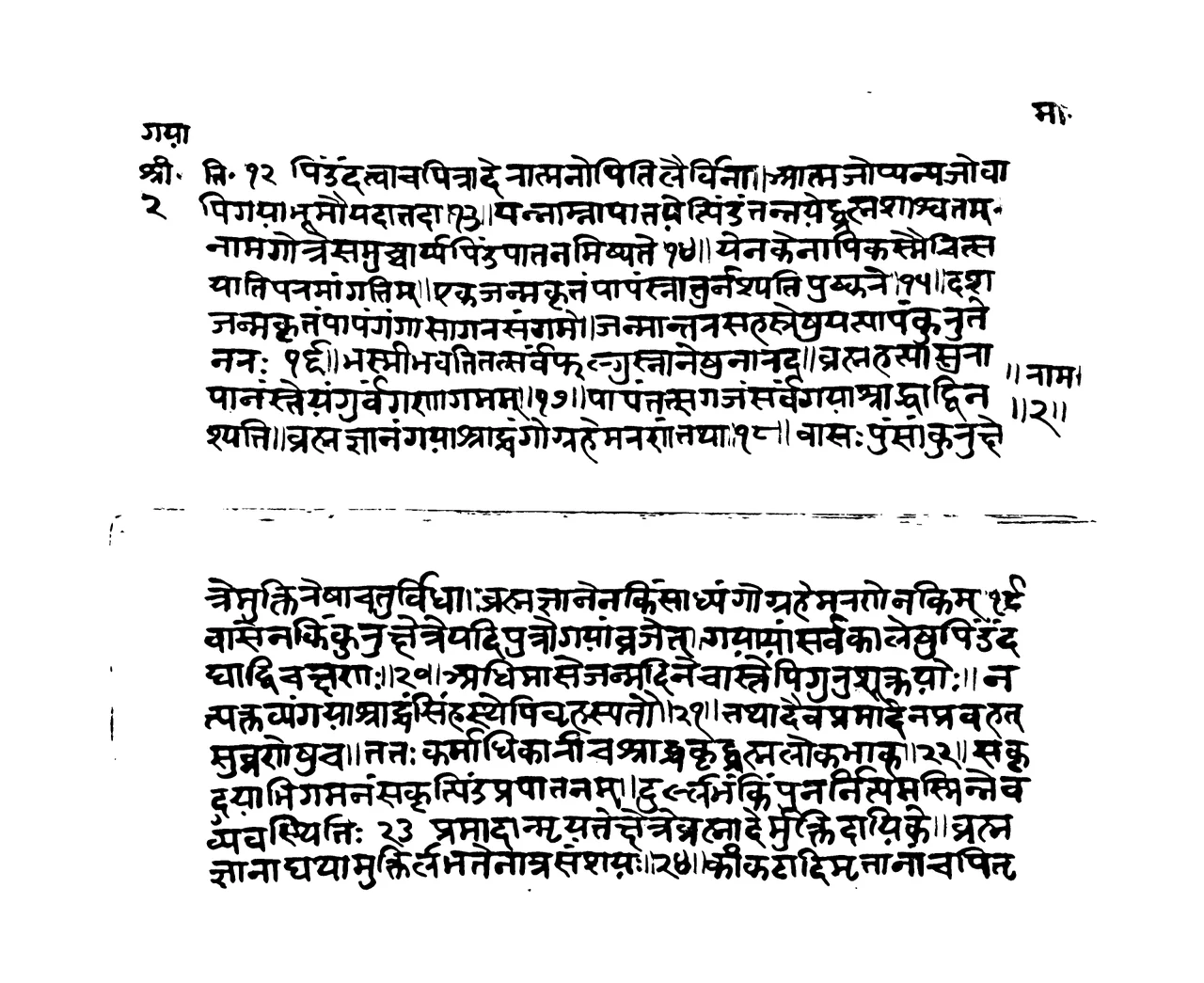
Who receives the offering?
Uttarardha 10.6–13 raises questions a reader may still ask: who are the Pitrs, and how can offerings benefit them? Verse 10 names the father, grandfather and great-grandfather in connection with three pindas, the prepared food offerings used in ancestral rites.
The chapter returns to name and gotra in verse 32. In this account the offering is directed to particular ancestors, rather than being an unnamed act of charity. Gotra is the lineage identification used in the ceremony; a family should explain honestly if its record is missing.
Why food and water are offered
Uttarardha 21.1–3 asks what offerings satisfy the ancestors. Verse 3 names sesame, rice, barley, black gram, water, roots and fruit. These are examples within a longer discussion of offerings and their religious merit, not a complete shopping list for every present-day ceremony.
तिलैर्व्रीहियवैर्माषैरद्भिर्मूलफलेन च।
Sense of the passage: sesame, rice, barley, black gram, water, roots and fruit are among the offerings described. Reference: Vayu Purana, Uttarardha 21.3.
Why Amavasya matters
Uttarardha 19.19–24 praises Shraddha on Amavasya, the new-moon tithi. Its explanation links ancestral offerings, Soma and the sustaining of the worlds. This is the Purana's religious account of their significance.
It explains why the occasion is valued. To identify the date in a particular year, use a panchang for the place concerned. The closing new moon of Pitrapaksha is discussed separately in Sarva Pitru Amavasya.

What it says about Gaya
Uttarardha 21.13–14 praises Shraddha at Gaya as akshaya: enduring or undiminishing in religious merit. The longer Gaya account in Uttarardha 49 names tirthas and describes offerings there. These passages are the basis for the Gaya guide's site-by-site references.
How to find these passages in a book
Keep the part name Uttarardha with the chapter number. Editions can organise or number their contents differently, so “chapter 19” alone may be hard to trace. The sources below identify the Sanskrit pages used here.
The Vayu Purana also treats creation, cosmic time, lineages, sacred places and yoga. Its Shraddha teaching is part of that wider religious work; this article is a reading guide to the passages relevant to ancestral remembrance.
Sources & further reading
- Vayu Purana, Uttarardha 10 — questions about the PitrsSanskrit text. See 10.6–13, especially 10.10 on three named ancestral pindas. Part and chapter numbering are stated explicitly.
- Vayu Purana, Uttarardha 19 — tithis and AmavasyaSanskrit text. Tithi discussion at 19.10–18; praise of Amavasya ancestral offerings at 19.19–24. Statements of merit are religious teachings.
- Vayu Purana, Uttarardha 21 — offerings and GayaSanskrit text. Offerings at 21.1–3; Gaya’s religious merit at 21.13–14. This supports sacred significance, not present-day ritual procedure claims.
- H. H. Wilson — description of the Vayu PuranaIntroduction to the Vishnu Purana, 1840, pp. xxii–xxiv. An identified historical description of broad contents and manuscript variation; not a modern definitive dating study.
- Vayu Purana, Uttarardha 49 — Gaya’s named tirthas and ancestral ritesPrimary Sanskrit chapter. Covers Manasa pools(1–13), Falgu(14–28), Dharmaranya and Matangavapi(29–36), Brahmasaras(37–44), Gayashiras and sacred footprints(50–87), and Akshayavat(93–100). Locators follow this Uttarardha numbering.
Read our editorial policy for sourcing and updates.
All articles and guides